



The war between Armenia and Azerbaijan started on 27 September, over the disputed Nagorno-Karabakh region, ended in early November 2020, as both sides decided to sign a ceasefire agreement. Unlike most wars in recent decades, this war has ended decisively in which Azerbaijan defeated the other side, that is Armenia. In the 1990s, it was the Armenians who had defeated Azerbaijan. But decades later it was the other way around, in a way that could have severe implications on the future of warfare. This is actually the first war in the history of modern warfare that has been won almost entirely on the strength of drone warfare.
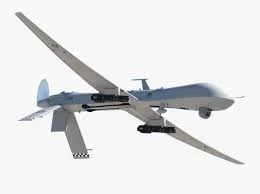
While Armenia only fought with tanks, artillery and air defence systems, Azerbaijan relied heavily on drones, specifically the Turkish-made Bayraktar TB2 and the Israeli-made Kamikaze drones. The two drones can carry bombs of up to 55 kg and 15 kg respectively. These are drones that are expensive, but very useful when it comes to targeting adversary’s, missile batteries particularly, their air defence radars, which emit radiation.
Azerbaijanian Deception Plan
Azerbaijan took an old biplane with a single propeller engine of 1947 vintage and converted these into unmanned single-use drones and sent them to the Armenian defences. The aim was to distract Armenian air defence radars, which thought there was a big threat coming. The Armenians activated their radars and missile batteries, which disclosed their positions. The Azerbaijan drones that had been encircling the area then came in, picked up their exact locations and destroyed them. The forces of Armenia and Nagorno-Karabakh, the ethnic Armenians who had been living in the disputed region, lost 185 tanks, 45 armoured fighting vehicles, 44 infantry fighting vehicles, 147 towed artillery guns, 19 self-propelled artillery, 72 multi-barrel rocket launchers and 12 radars. Azerbaijan’s losses were only one-sixth of this. It appeared that armoured vehicles or tanks were there for target practice for the drones. If you have drone superiority, you don’t get tanks to fight tanks anyway.
That’s how almost the entire Armenian air defence and missile defence, surface-to-air missile defence was taken out, which left all mechanised forces at the mercy of predatory drones.
Advantage Drone
Drones have the advantage of having a very small radar signature, low noise which can debilitate an unsuspecting force by having a devastating effect on the morale of soldiers because they do not know what will come and hit them. The drones simply pick up the electronic emission or the heat signature of the target and hit them. The drones have proved to be superior to an army sitting on the ground and air force with very expensive jets having pilots.
The Implications for India
These drones are very controversial, because the Turks designed these and built these after the Americans and NATO put sanctions keeping the Turkish from buying drones from them. Canada had also stopped exporting electronic parts that were being used by Turkey to build drones.
At the heart of the issue was the devastation that had been caused by the drones by Turkey in the conflicts in Syria and Libya. As the conflict between Armenia and Azerbaijan proved, Turkey developed the capability to build its own drones. Turkey and Pakistan are now very close allies. It is possible that Turkey could give these drones to Pakistan, if it could raise enough money to buy them. So India has to work on the presumption that Pakistan has access to these.
It is not as if the tanks and armoured vehicles will become obsolete, but Nagorno-Karabakh has shown the ever-increasing importance of using armed drones along with other weapons and highly trained ground forces, adding an exponential complexity to modern warfare.


