



INTRODUCTION
After prolonged deliberations and brain storming between Army and Air Force think-tanks, the concept of an integrated Air Defence Command emerged to have better efficiency and coordination of effort in the theatre of war. ADC(Air Defence Command) is the need of the hour taking into consideration the new threat perception emerging from the present tensed scenario in the Chinese LAC. Earlier this year, DMA under Chief of Defence Staff (CDS) General Bipin Rawat was given the directive to create joint military commands along with theatre commands.
A study is being done on the structure of the Command which will be under the Indian Air Force (IAF). In view of the growing tensions between India and China along the Line of Actual Control (LAC) in eastern Ladakh, the government is expected to announce the formation of a new Air Defence (AD) Command soon. The organisation and structure of the Command which will be under the Indian Air Force (IAF) is in pipeline and will be materialized before the end of the year.At the annual press conference ahead of the IAF Day this year, responding to a question related to the formation of the new Air Defence Command, the Chief of Air Staff Air Chief Marshal RKS Bhadauria said, “The study for setting up the Command is in the advance stage.”
Expected to be located near the IAF’s Central Command which controls some of the most important strategic assets in the country, this is part of the Department of Military Affairs (DMA)’s process of restructuring of the Indian Armed Forces, under Chief of Defence Staff (CDS) General Bipin Rawat who was given the directive to create joint military commands along with theatre commands.
Aim of the Air Defence Command
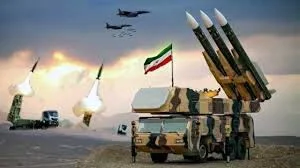
The primary goal of ADC is to protect the air space and vital strategic assets of the country from hostile air strikes.The plan is to get the air assets of the three services under one command, including the S-400 ‘SA-21 Growler’ Air Defence Systems which will start arriving from 2021 for the IAF. Such an integrated single Command will enhance the efficiency and strike capability of Indian Air Defence.
Air Defence (AD) Threat Perception
It means the evaluation of its ‘susceptibility and vulnerability’ against the enemy’s offensive capabilities. India is surrounded by two nuclear-armed countries – Pakistan and China, and they perpetually maintain a ‘minimum credible deterrence’ against India. They have also strategically deployed various ballistic and cruise missiles (both conventional and nuclear-capable) against India.
The three services — the Indian Army, the Navy and the Air Force all maintain their own Air Defence resources which are meant to counter specific threats perceived by each service. Thwarting enemy attack in the air will be the responsibility of the IAF. However Army Air Defence is committed to safe guarding the VPs (Vulnerable Points) and vital installations strategically important to be protected from enemy bombardment and air strikes. Hence an Air Umbrella to protect the vital assets including the armoured battle tanks during a battle, falls on the shoulders of AAD. It is expected that once the AD assets are integrated it will help in avoiding ‘fratricide’ during heightened security conditions.
Tri-services AD Assets & Efforts
In an effort to enhance its operational capability, the IAF is all set to get the Surface-to-Air Guided Weapon (SAGW) and sophisticated AD Radars. This will also help in integrating all sensors, command control structures and weapon systems for an Integrated Air Defence Command for carrying out its operations.
Software Defined Radios (SDR), are expected to be interfaced with IAF’s indigenous C4I system — Integrated Air Command and Control System (IACCS). There are plans afoot to deploy an Airborne Early Warning and Control (AEW&C) system which will give support AD and offensive strike missions over the tactical battle area. And for this purpose, IAF had inducted one AEW&C aircraft in 2018. To keep the Indian air space safe, integration of IACCS with Surveillance Network of Civil Aviation is also underway in a phased manner.
Also, for their immediate AD requirements, Israeli Spyder LLQRM System, equipped with Python 5 and Derby missiles have been procured by the IAF. This system is for low level quick reaction SAM( Surface to Air Missiles) system, and it will provide AD against hostile aircrafts, helicopters, cruise missiles and UAVs.
Revamping AD Assets of Indian Navy
It maintains its AD assets primarily on the sea platform. And as has been reported earlier, for detecting air targets including missiles, the modern naval warships are fitted with advance ‘Phased Array Radars.’ These have specialized radar beams which can search and track multiple aircraft and missiles simultaneously. With two SAM complexes in Fore and Aft configuration, the frontline warships get total 360-degree air engagement capability to a ship. Also, for engaging air targets a couple of kilometres away, the ships are fitted with Close-in Weapon Systems (CIWS) like rapid-fire AK-630 systems.
There are at least two layers of AD cover for the Aircraft Carrier or the Main battle ships. While the outermost AD screen is provided by picket ships like Corvettes which are equipped with early warning radars, cruising at a radius above 100km from the Flagship, there are carrier-borne fighter jets which provide the Combat Air Patrol (CAP). For the inner screen of about 20km radius of Flagship, there are anti-air capability warships.
Indigenization of Air Defence capability
To defend vital assets against ballistic missile attacks, there is an ambitious Ballistic Missile Defence (BMD) which is for the development of the two-layered programme. In 2018, the capability was tested against two-stage ship launched target missile — by intercepting two kinds of missiles — Endo-Atmospheric Interceptor Missile (AAD-26) mission against long-range simulated targets and an exo-atmospheric interceptor missile (PDV04).
In 2019, Anti-Satellite Missile test (Mission Shakti) was completed in which Ballistic Missile Defence (BMD) interceptor missile engaged Indian target satellite in low earth orbit (LEO) in a ‘Hit to Kill’ mode. The interceptor missile has three-stages with two solid rocket boosters and it has now given India the capability to defend its assets in outer space. Also, it can be used against inter-continental ballistic missiles (ICBMs), particularly those which are expected to travel through space before re-entering Earth’s atmosphere to hit a target.
The Quick Reaction Surface-to-Air Missile (QRSAM ) is a system which has the capability of engaging multiple targets at ranges of up to 30 km and is currently under development. Fire Control Radar (ADFCR) ‘Atulya’ is indigenously designed by DRDO for the Air Defence and its associated anti-aircraft guns for point AD system at short and very short ranges.The Indian Army is indigenizing an Air Defence Tactical Control Radar (ADTCR) as a successor to existing Indian Doppler Radar (INDRA) and P19 radars.
Conclusion
Integration of Tri- Services Air Defence weapons encompasses heavy sophisticated weapon system viz, Anti- Aircraft Guns, short range, medium range and long range SAM missile systems ( Akash AD System is indigenously designed by DRDO) and Early warning / Fire Control Radars.
The entire Air Defence Control and Command under one roof is an unavoidable eventuality in these troubled times for India.
Jai Hind


