



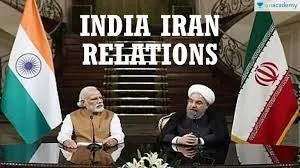
Highs and Lows in Indo-Iran Relations
India and Iran have historically enjoyed good relations culturally and politically. In the last few decades India had been one on Iran’s biggest oil/gas importer along with China. Iran is a predominantly Shia country having enormous influence in Iraq and Syria, both Shia countries and has been instrumental in arming anti-Israel militias like Hezbollah.
Last week Iran criticized India twice on Delhi riots. On 02 March, Iranian Foreign minister Javed Sharif, who is known for his balanced use of words, tweeted about ‘the wave of organized violence against Indian Muslims’ and urged India not to ‘let the senseless thuggery prevail’. This was followed by another criticism by Iranian Supreme leader Ayatollah Khamenei through a tweet with a title – ‘India’s Muslims are in danger.
There have been two other occasions when Iran criticized India in 1992 and 2002.
1992 Demolition of Babri Masjid and Iranian reaction of Blow Hot – Blow Cold
A day after the demolition of Babri Masjid the then Indian ambassador to Iran, Mr Hamid Ansari (later the Vice President of India) was summoned and issued with a ‘de marche’. Protests were organized in front of Indian embassy. India promised to ‘right the wrongs’.
Indian PM, Mr PV Narsimha Rao was the first Prime Minister of India to visit Iran since the Islamic Revolution of 1989. Iran blocked a consensus move on Kashmir in the United Nations Human Rights Council in 1994. Within a few months Iran again criticized India for reneging on its demand to let a delegation of OIC ambassadors to Kashmir.
Later the relations with Iran improved after the Taliban came to power in Afghanistan and the ISI power play in Afghanistan gained momentum. In 1995, the Iranian President Mr Rafsanjani came to India, where the Indian Prime Minister Mr Narsimha Rao went to the airport to receive him with a red carpet. His address to a joint session in Parliament received a standing ovation. President went ahead to endorse India’s secularism at the Imambara in Lucknow and also put down Pakistani journalist question on India’s seriousness on Kashmir issue and was at pains to stress Iran’s neutrality on Kashmir.
2002 Gujrat Riots
During and after the Gujrat riots, Iran’s stance remained rather restrained. Iranian government under Mohd Khatami did convey its concerns, but remained content to leave it as an internal matter of India. President Khatami visited India in 2003 as the chief guest at Republic day parade and did not raise the issue with PM Atal Bihari Vajpayee even once.
Why is 2002 Different?
Things started changing gradually after the Indo – US nuclear deal as India gradually steered closer towards the US. India had voted against Iran in 2008/09 in the International Atomic Energy Commission at the United Nations on nuclear issue.
The Context today
India has virtually stopped buying oil from Iran under the threat of sanctions from the US. It is also important to note that China has become Iran’s biggest partner. The following are some important points driving Irans actions:
- While India is strengthening its ties with the US, Iran knows that India needs Iran for access to Afghanistan and Central Asia through Chabahar Port. India has got a waiver from US for Chabahar, it is thought that Iran may want India to intercede with the US for more energy specific waivers from the US.
- After the recent US – Taliban agreement, Iran knows that India wants Iran on its side as Pakistan will have greater influence in Afghanistan with the Taliban in place.
- Iran is also positioning itself to play a leadership role in the Islamic world, Saudi Arabia and UAE perceived closer the US.
The message
Iran has been trying to improve relations with India since 1990s. PM Modi has made extensive efforts to improve relations in the last five and a half years with the Islamic world, from Saudi Arabia to Iran, UAE to Indonesia. These statements from not only Iran but also from other Muslim majority countries like Malaysia, Turkey and even Indonesia are a strong signal signalling a weakening of India’s diplomatic clout.


