



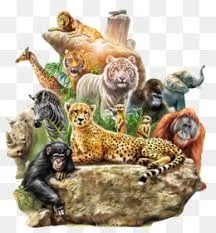
State of our Diverse Wild Life
Recent studies carried out by World Wildlife Fund (WWF) on behalf of the United Nations has indicated that Wildlife populations have fallen by more than two-thirds in less than 50 years. The report says this “catastrophic decline” shows no sign of slowing. Major causes cited by the report are deforestation, over exploitation of fishing resources, destruction of wild life habitats and excessive reliance on meat products to meet the food needs of the growing population. All this is resulting in risking health of human beings and their security and survival on Earth.
Factors believed to lead to the emergence of pandemics – including habitat loss and the use and trade of wildlife – are also some of the drivers behind the decline in wildlife. The Covid-19 pandemic is a stark reminder of how nature and humans are intertwined.
Modus of conduct of this study
Measuring the variety of all life on Earth is complex, with a number of different measures. Taken together, they provide evidence that biodiversity is being destroyed at a rate unprecedented in human history.
The report looked at thousands of different wildlife species monitored by conservation scientists in habitats across the world. They recorded an average 68% fall in more than 20,000 populations of mammals, birds, amphibians, reptiles and fish since 1970. The populations will undoubtedly continue to fall, driving wildlife to extinction and threatening the integrity of the ecosystems on which we depend if urgent steps to halt this degradation are not taken.
This particular report uses an index of whether populations of wildlife are going up or down. It does not tell us the number of species lost, or extinctions. The largest declines are in tropical areas. The drop of 94% for Latin America and the Caribbean is the largest anywhere in the world, driven by a cocktail of threats to reptiles, amphibians and birds.
Can this be reversed?
The data has been used for modelling work to look at what might be needed to reverse the decline. New modelling evidence suggests we can halt and even reverse habitat loss and deforestation if we take urgent conservation action and change the way we produce and consume food. Doing so will require systemic shifts in how we produce food, create energy, manage our oceans and use materials.
Above all it will require a change in perspective. A change from viewing nature as something that’s optional or ‘nice to have’ to the single greatest ally we have in restoring balance to our world.


